Mon to Fri, 8:00am to 5:00pmUtalii Court, Gesora Road, Nairobi

+254 184 379 590+254 719 450 317 Altinfo@gstechguard.co.ke

Security systems

Fingerprint vs face recognition: which biometric system suits your site?

A practical comparison of fingerprint vs face recognition for attendance and access control in Kenya, covering speed, accuracy, hygiene, dusty or worn fingers, lighting, cost, payroll links and data protection.

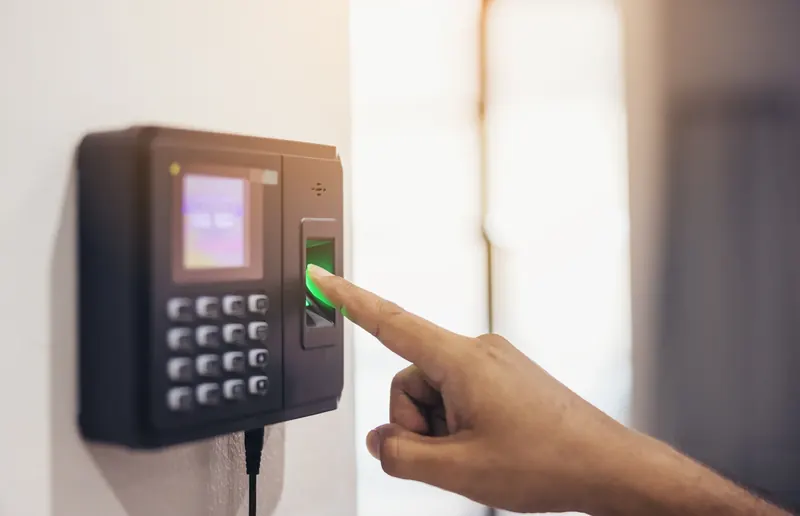
Finger pressed on an attendance terminal, comparing fingerprint vs face recognition

Quick answer

Fingerprint terminals cost less and work well in clean offices, but they struggle with dusty, wet or worn fingers. Face recognition is faster and contactless, and suits factories, farms and busy entrances, though it needs good placement and lighting. Many sites use both, chosen door by door.

Fingerprint vs face recognition is the first question most Kenyan businesses ask when they move from paper registers or cards to biometrics. In both cases, the methods prove that the right person clocked in or opened the door, which ends buddy punching and lost cards. However, they behave very differently at a dusty factory gate, a busy hospital entrance or a quiet office. This guide compares the two honestly, so you can choose the right terminal for each location. For installation, see our biometric attendance systems and access control systems pages.

Fingerprint vs face recognition in Kenya

How each method works

Fingerprint terminals scan the ridges on a finger and compare them with a stored template. The user places a finger on a small sensor.

Face recognition terminals use a camera, often with infrared, to measure features of the face and compare them with a stored template. The user simply looks at the screen from a short distance.

In both cases, good systems store a mathematical template rather than a photo or image of the fingerprint.

Access control

Fingerprint vs face recognition at a glance

Factor Fingerprint Face recognition
Speed per person About 1 to 2 seconds Under 1 second, hands free
Contact Touch required Contactless
Dusty, wet or worn fingers Often struggles Not affected
Lighting Not affected Needs suitable placement
Masks, helmets and caps Not affected Masks or helmets may reduce accuracy
Terminal cost Lower Higher
Best for Clean offices, small teams Factories, farms, sites, busy gates

Access control

Fingerprint vs face recognition: speed and queues

At shift change, hundreds of workers may arrive within minutes. Here, speed matters. Face recognition usually wins, because users do not need to place a finger carefully or retry. In contrast, fingerprint terminals can create queues when fingers are dirty or dry. Therefore, busy factory and farm gates often suit face terminals, or several fingerprint terminals side by side.

Access control

Fingerprint and face recognition accuracy

In general, both methods are accurate in good conditions. However, real sites are rarely perfect.

Fingerprint readers struggle with:

  • Dusty or oily hands in workshops and farms
  • Wet hands in kitchens, laundries and food processing
  • Worn fingerprints, common among manual workers and older staff
  • Cuts and plasters

Face recognition struggles with:

  • Strong backlight from a window or the sun
  • Very dark entrances without lighting
  • Masks, helmets or heavy caps, depending on the model
  • Poor mounting height

Consequently, the right choice depends on who uses the terminal and where it sits. In the fingerprint vs face recognition decision, the environment usually matters more than the technology.

Fingerprint terminal in use at an office
Fingerprint terminals suit clean offices with smaller teams.

Access control

Hygiene: fingerprint or face recognition

Since the pandemic, many organisations prefer contactless methods. Face recognition needs no touch, which suits hospitals, clinics, food factories and kitchens. By comparison, fingerprint sensors can be cleaned regularly, yet they still involve shared contact.

Costs and pricing

Fingerprint vs face recognition cost

Woman using a wall-mounted access reader in an office

Biometric attendance terminals typically cost KSh 25,000 to 90,000 per terminal in 2026, including setup and enrolment, depending on the model and features. Fingerprint terminals sit at the lower end, while face terminals with infrared and larger user capacity sit higher. Door access with locks and controllers costs more. See our security systems price guide for wider ranges.

However, terminal price is only part of the cost. Consider the time lost in queues, retries and manual corrections. As a result, a cheaper terminal can cost more in daily use if it does not suit the site.

Fingerprint vs face recognition in Kenya

Attendance, payroll and reports

Typically, most biometric terminals store clock-in and clock-out records and export them to attendance software. Good software then calculates hours, overtime, lateness and absence, and exports to payroll. Before buying, check:

In addition, choose software that managers can use without calling the installer every month.

Access control

Fingerprint vs face recognition for access control

For doors, the same comparison applies, although there are a few extras. A door terminal must link to a lock, exit button, door contact and power backup. It must also release in a fire. For sensitive rooms, such as server rooms or cash offices, some sites combine a card with a biometric check for two-factor access. Our guide to office access control systems explains door planning in detail.

Options compared

Which to choose by site type

  • Offices. Fingerprint terminals often work well and cost less. Face terminals suit reception areas with many visitors and staff.
  • Factories and warehouses. Face recognition handles dusty hands and busy shift changes better.
  • Farms and flower farms. Face recognition suits workers with worn or wet hands, ideally under a shade.
  • Hospitals and clinics. Contactless face terminals support hygiene.
  • Schools. Staff attendance works with either. Fingerprint terminals are common for smaller teams.
  • Construction sites. Face terminals with weatherproof housings and battery backup suit outdoor gates.

See our schools and warehouses and factories guides for more.

Biometric data is sensitive personal data under the Data Protection Act, 2019. So organisations must have a lawful reason to collect it, tell staff what is collected and why, keep it secure and delete it when no longer needed. In some cases, a data protection impact assessment is expected. The Office of the Data Protection Commissioner publishes guidance. In addition, offer an alternative, such as a card, for staff who cannot enrol.

Power, network and weather

Both terminal types need reliable power and, for most software, a network connection. So connect each terminal to a UPS or battery backup, otherwise clock-ins are lost during outages and doors may fail. In addition, outdoor terminals need weatherproof housings, shade and surge protection, especially in areas with frequent lightning. Where a gate is far from the office, a wireless link or fibre can carry data back to the server. Finally, check that terminals store records locally when the network drops, then upload them once it returns, so no attendance data is lost.

How it works

Installation tips for both types

  1. Mount terminals at a comfortable height for most users.
  2. Shade outdoor terminals from direct sun and rain.
  3. Avoid placing face terminals opposite bright windows or doors.
  4. Enrol each person carefully, with two or more fingers for fingerprint systems.
  5. Put terminals on backup power, so attendance and doors work during outages.
  6. Train supervisors to manage users and correct records.

Fingerprint vs face recognition in Kenya

Enrolment and daily management

Whichever method you choose, careful enrolment decides how well the system works. For fingerprint systems, enrol two or three fingers per person, so a cut or plaster does not lock anyone out. Similarly, for face systems, enrol each person in normal lighting and without hats or glasses that they rarely wear. In addition, plan enrolment day carefully. For example, a factory with 300 workers may need several hours and a clear schedule by department.

After enrolment, someone must manage the system. New staff need enrolling, leavers need removing and supervisors need to correct missed punches. Therefore, choose software with clear user management and train at least two administrators. Meanwhile, back up the user database regularly, because re-enrolling hundreds of people after a failure takes a long time.

Testing before you buy

Finally, if you are unsure in the fingerprint vs face recognition decision, test both. Ask your supplier for a short trial at your busiest entrance, with your real staff and real conditions. Within a week, you will see queue times, failed reads and staff feedback. As a result, you can decide with evidence rather than brochures.

Making the decision

In summary, the fingerprint vs face recognition choice is rarely about which technology is better in general. Instead, it is about which one suits each entrance, each group of staff and your budget. Many sites use both: face terminals at busy gates and fingerprint terminals in quieter offices.

To plan the right mix for your site, request a site survey.

Get started

Book a site survey

Tell us about your site and an engineer will call you back within one working day to discuss your needs and arrange a visit.

  • Clear, itemised written quote
  • Security, network, fire and power from one team
  • Support and maintenance after handover

Prefer to talk? Call +254 184 379 590

We reply within one working day. Or call +254 184 379 590.

Frequently asked questions

Fingerprint or face recognition: which is better?

Neither is better everywhere. Fingerprint terminals cost less and suit clean offices. Face recognition is faster, contactless and copes with dusty or worn hands, so it suits factories, farms and busy gates. Many sites use both.

Can attendance data export to payroll software?

Yes. Most terminals export records to attendance software, which calculates hours and overtime and exports to payroll. Check the export format your payroll system accepts before buying.

Do biometrics work with wet or dusty hands?

Fingerprint readers often struggle with wet, dusty, oily or worn fingers. Face recognition is not affected by hand condition, which is why it suits factories, kitchens and farms.

Is storing staff biometrics legal in Kenya?

Yes, with care. Biometric data is sensitive personal data under the Data Protection Act, 2019. Organisations need a lawful reason, must inform staff, keep the data secure and delete it when no longer needed.

Planning a project or fixing a fault?

Tell us about the site. We will arrange a survey, give you a clear written quote and explain the options in plain language.

CallWhatsAppAsk usQuote